
Hello, my friends!
This week kicked off with a stark reminder to investors that trade-related drama and uncertainty remains very much a part of the economic landscape, with a 400-plus-point drop in the Dow Jones Industrial Average triggered by a fresh wave of White House tariff declarations.
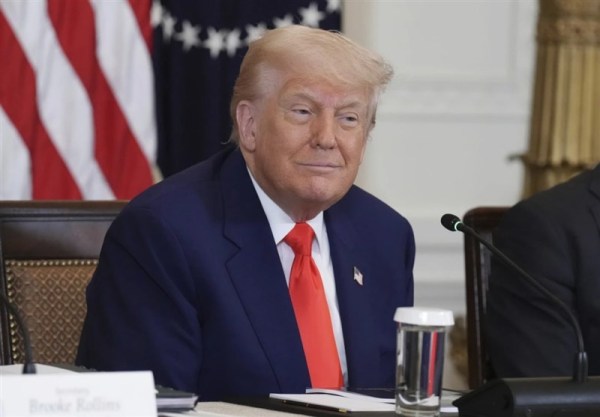
On Monday, President Trump announced that as of August 1, at least 14 countries will be facing duties similar to the “Liberation Day” tariff rates that he imposed on April 2 – and subsequently paused for 90 days.
That pause was scheduled to end on Wednesday, but the president extended it to the beginning of August as he announced the updated tariff schedule.
While imports from some nations, including Japan and South Korea, now will be taxed at relatively milder tariff rates of 25%, other countries, including Laos and Myanmar, are looking at rates as high as 40%.
Per the official notification letters sent to each nation, the rates may be adjusted either up or down “depending on our relationship with your Country.”
FOMC Minutes: Policymakers See Rate Cuts Coming but Can’t Agree on Details
Other prominent news from this economic week included the release on Wednesday of the minutes from the Federal Reserve’s June policy meeting, which revealed that while most central banks see rate cuts looming, there’s little agreement on the particulars at this time.
As you may know, policymakers elected last month to leave the fed funds target range at 4.25%-4.5%, the fourth time they’ve stood fast rather than make any rate changes. Still, the newly published minutes suggest there is a general consensus among members of the Federal Open Market Committee that rate reductions will resume before 2025 is finished, with the summary noting:
“Most participants assessed that some reduction in the target range for the federal funds rate this year would likely be appropriate.”
However, as for the details of any prospective cuts, such as when they might begin or just how many we could see this year, the meeting narrative indicated there was no consensus at all.
For example, according to the minutes, a “couple” of participants suggested rate cuts could begin as soon as this month’s meeting, while “some” said it may be best not to reduce rates at all this year.
Recently, Fed Governors Michelle Bowman and Christopher Waller have said publicly they would be in favor of cutting rates this month if inflation continues to cooperate; even though the meeting minutes don’t refer to participants by name, then, it seems a reasonably safe bet that Bowman and Waller are the “couple” of officials open to resuming cuts this month.
Still, it seems that no rate cuts will be coming until the requisite number of policymakers are satisfied that tariff distress won’t exacerbate price pressures:
“Participants agreed that although uncertainty about inflation and the economic outlook had decreased, it remained appropriate to take a careful approach in adjusting monetary policy.”
Currently, more than 90% of traders are betting we’ll not see a rate cut in July, while 70% say the Fed will start cutting again at its September meeting.
New York Fed Survey Reveals Consumers’ Inflation Fears Subsiding
Perhaps improving the outlook for the resumption of rate cuts was another key bit of news this week that actually seemed to fly under the radar: a decline last month in the inflation expectations of American consumers.
According to June’s Survey of Consumer Expectations conducted by the Federal Reserve Bank of New York, Americans believe annual inflation will be at 3% as of June 2026. That 0.2 percentage point drop from May puts consumers’ 12-month inflation expectations back down to where they were in January, before a wave of tariff-induced anxiety pushed those year-out inflation projections up to 3.6% in March and April.
This is important in part because rising inflation expectations can be a distinct challenge for monetary policymakers. That’s because there’s a risk those expectations might serve to drive prices higher as consumers accelerate spending in an effort to beat the future inflation they believe will come to pass.
Analysts say that because the imposition of tariffs has yet to reintensify price pressures, Americans have grown hopeful that they may, in fact, dodge what they’ve feared is a looming inflation bullet. The annual consumer price index rose 0.1% in May to land at 2.4%, but that’s a relatively giant step down from the 3% level at which CPI sat in January just prior to the onset of the current tariff drama.
Other notable data from the most recent Survey of Consumer Expectations included a 0.8 percentage point drop in the mean perceived probability of losing one’s job within the next year to 14%. That’s the lowest reading for that metric since December.
Optimism Among Small Business Owners Remained Resilient in June
In other news, optimism among America’s small business owners remained fairly resilient in June, as evidenced by last month’s Small Business Optimism Index released on Tuesday by the National Federation of Independent Business (NFIB).
The index fell just two-tenths of a percentage point to land at 98.6, keeping the metric above both the consensus estimate of 97.9 and its historical average of 98.
Perhaps even more notable than the durability of the headline measure was the decline in a key collateral metric, the Uncertainty Index, which dropped five points last month to come in at 89. Although still relatively high, the Uncertainty Index now is at its lowest level of the year.
As for the single most important problem faced by business owners last month, the survey results revealed it was taxes, with 19% of respondents saying so. For much of the last several years, inflation was cited each month as the biggest problem faced by business owners, but that was down to 11% in June, the lowest level since September 2021.
One area of persistent concern for business owners remains labor quality, with 16% of survey respondents reporting that as their biggest operational challenge. In fact, according to the data, 86% of business owners who said they were looking to hire last month “reported few or no qualified applicants” for the positions they were seeking to fill.
In a statement on the survey results, NFIB chief economist Bill Dunkelberg referred to small business owner optimism as “steady,” adding:
“Taxes remain the top issue on Main Street, but many others are still concerned about labor quality and high labor costs.”
Treasury Reveals Uncle Sam Reaped a Budget Surplus in June as Tariff Revenue Soared
Finally this week, the Treasury Department reported on Friday that the federal government actually posted a budget surplus in June, thanks to a sizable boost in receipts last month fueled by a windfall of tariff revenue.
You read that correctly: The government brought in more money than it spent last month…and did so thanks to the wide array of tariffs imposed by the Trump administration.
Love them or hate them, there’s no denying that tariffs now are reaching critical mass as revenue-generation mechanisms. According to the numbers, the federal government managed to collect $26.6 billion in net tariff revenues last month. Not only is that more than four times the $6.3 billion collected in June 2024, it’s a new all-time record for monthly tariff revenue.
As for the impact on the budget deficit, the tariff monies realized last month – along with a $187 billion drop in June government spending – combined to hand the country a $27 billion budget surplus in June.
That good news aside, the running total of the annual deficit still is slightly north of $1.3 trillion, which is about 5% above where it was this time last year. When the dust settled on fiscal year 2024, the deficit total landed at $1.83 trillion…the third-highest annual budget deficit in U.S. history.
That’s it for now; enjoy the rest of your weekend!
This post is created and published for general information purposes only. The Gold Strategist blog and Bob Yetman disclaim responsibility for any liability or loss incurred as a consequence of the use or application, either directly or indirectly, of any information presented herein. Nothing contained in this post – or any other post featured at this blog – should be construed as a solicitation or recommendation to engage in any financial transaction. You should seek the advice of a qualified professional before making any changes to your personal financial profile.
 The Gold Strategist