
Economic Week in Review: Powell Faces Music in Congress, Inflation Gets Hotter, Consumers Lose Confidence, and More

Hello, my friends!

It was another ultra-busy week in the economy, one that saw a variety of fresh data emerge, including new numbers on inflation, business activity and consumer confidence. But among the week’s biggest news was Federal Reserve Chair Jerome Powell’s appearance on Capitol Hill, where he delivered his latest Semiannual Monetary Policy Report to Congress.

Powell Emphasizes Policy Caution in Report to Congress

As you might imagine, the near-term outlook for interest rates was the most prominent topic throughout Powell’s testimony. The chair spent much of his time explaining the central bank’s cautious approach to any further policy-loosening, and attributing that caution to what he said is persistent uncertainty about just how the Trump administration’s tariff agenda ultimately may impact prices.

Powell testified before the House Committee on Financial Services on Tuesday and in front of the Senate Committee on Banking, Housing, and Urban Affairs the following day, delivering identical prepared remarks to each body.

In those remarks, the Fed chair defended the wait-and-see approach he says central bankers are taking now with respect to monetary policy as tariff impacts work their way through the economy.

Tariff consequences “could be large or small,” Powell noted. “It is just something you want to approach carefully. If we make a mistake people will pay the cost for a long time.”

The chair also said that members of the Federal Open Market Committee are “well positioned to wait to learn more about the likely course of the economy before considering any adjustments to our policy stance.”

In his direct exchanges with lawmakers, Powell unsurprisingly found himself the target of those frustrated with the chair’s reluctance to drop rates amid signs of slowing inflation. Ohio Republican Senator Bernie Moreno went as far as to effectively accuse Powell of playing politics with monetary policy, telling him, “You should consider whether you’re really looking at this from a fiscal lens or a political lens, because you just don’t like tariffs.”

But during his two days of testimony, Powell did indicate that he is, in fact, open to lowering rates in the near future if the data justifies doing so.

“I think if it turns out that inflation pressures do remain contained then we will get to a place where we cut rates sooner rather than later,” Powell told Republican Representative Mike Lawler on Tuesday.

As things stand right now, however, few are expecting to see a rate cut before September, with more than 80% of traders betting that the benchmark fed funds rate will remain at the current target range of 4.25%-4.5% through the July policy meeting.

Fed’s Favorite Inflation Measure Shows Price Pressures Reintensified Last Month

In fact, the prospect of a rate cut in July likely diminished further following the release this week of the personal consumption expenditures price index numbers for May, which showed that inflation pressures moved in the wrong direction last month.

On Friday, the Commerce Department reported that headline PCE increased in May at a monthly rate of 0.1% while the year-over-year rate rose at a pace of 2.3%. Both numbers were in line with the expectations of economists surveyed by Dow Jones, but the annual pace represents an acceleration by a tenth of a percentage point over the April rate.

The more disconcerting news was delivered by core PCE, which strips out volatile food and energy prices to get a more accurate look at underlying price pressures. Core rose 0.2% for the month and 2.7% year over year…each a tenth of a point faster than both the April results and economists’ projections.

Notably, the PCE report also showed unexpected drops in consumer spending and personal income last month (-0.1% and -0.4%, respectively), data which otherwise might prompt policymakers to more seriously consider a rate cut next month.

But economists say that as long as inflation is inclined to reintensify, the central bank will sit tight, with Eugenio Aleman, chief economist at Raymond James, suggesting that Friday’s data “will continue to keep the Federal Reserve on the sidelines for now.”

Key PMI Data Suggests Continued Resilience Among Manufacturing and Services Sectors

Also this week, a widely followed set of numbers suggested that business activity in the U.S. remains resilient despite the ongoing threat of potential tariff-related disruptions.

On Monday, the folks at S&P Global revealed that its Flash U.S. Composite Purchasing Managers’ Index ticked down in June but still reflected a solid pace of overall activity this month across both the manufacturing and services sectors.

Composite PMI came in at 52.8…slightly off May’s 53 reading but above the critical level of 50 that separates expansion from contraction in these kinds of diffusion indexes as well as above the 52.2 measure that had been projected by economists.

As for the sector-specific indexes, each of those also landed on more solid footing than economists expected. Flash Manufacturing PMI held at 52 for the second month in a row, higher than the consensus estimate of 51, while Flash Services PMI came in at 53.1…a little off May’s 53.7 but better than the 52.9 that was anticipated.

Note that Flash PMIs are advance estimates of the final numbers that come out at the end of each month and calculated using roughly 85% to 90% of the survey responses.

Commenting on the June numbers, Chris Williamson, chief business economist at S&P Global Market, emphasized the possibility that business conditions may deteriorate from here, saying, in part:

“The June flash PMI data indicated that the US economy continued to grow at the end of the second quarter, but that the outlook remains uncertain while inflationary pressures have risen sharply in the past two months.”

Consumers Grew a LOT More Pessimistic in June  

Finally this week, we received some especially unwelcome news from The Conference Board on Tuesday in the form of its Consumer Confidence Index for June.

It seems the index sank more than five points this month, dropping to a reading of 93 from the 98.4 recorded in May and coming in well below the measure of 99 expected by economists.

The June number also marks the fourth straight month the index has fallen short of the neutral reading of 100. Measures below 100 imply greater pessimism among Americans.

The board reported that respondents to its survey remain particularly concerned about the impact that tariffs still may have on the economy and prices.

On that note, the Expectations Index … a component measure of the overall index … tumbled 4.6 points to come in at a measure of 69. The Expectations Index gauges consumers’ six-month outlook for the economy, and according to The Conference Board, readings below 80 imply a recession could be ahead.

“Consumer confidence weakened in June, erasing almost half of May’s sharp gains,” said Stephanie Guichard, senior economist at The Conference Board. “The decline was broad-based across components, with consumers’ assessments of the present situation and their expectations for the future both contributing to the deterioration.”

“Consumers were less positive about current business conditions than May,” Guichard added.

That’s it for now; have a marvelous weekend!

This post is created and published for general information purposes only. The Gold Strategist blog and Bob Yetman disclaim responsibility for any liability or loss incurred as a consequence of the use or application, either directly or indirectly, of any information presented herein. Nothing contained in this post – or any other post featured at this blog – should be construed as a solicitation or recommendation to engage in any financial transaction. You should seek the advice of a qualified professional before making any changes to your personal financial profile.
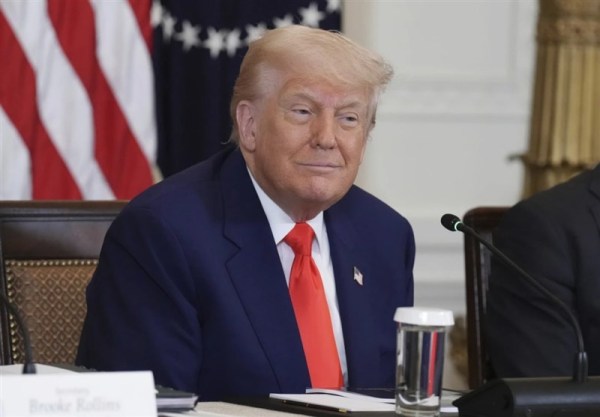
CBO: Big, Beautiful Bill Looks Even Uglier After Second Glance

Analysts at the Congressional Budget Office recently took a closer look at President Trump’s landmark budget reconciliation known as the Big, Beautiful Bill…and concluded it’s even uglier than it appeared after their initial passing glance.

Upon completion last week of its second – and more comprehensive – review, the CBO revealed the bill actually could add about $2.8 trillion to deficits over the next 10 years…roughly $400 billion more than the agency’s previous estimate of $2.4 trillion.

Notably, the first number did not account for the manner in which the bill would impact the economy nor the consequential effects on the budget from those impacts. The scope of the initial estimate was limited to the bill’s prospective direct impact on the budget. The updated “dynamic” estimate seeks to account, as well, for the potential macroeconomic effects of the bill, including its anticipated impacts on inflation, interest rates and overall economic growth.

And the CBO’s conclusion? Life under the Big, Beautiful Bill is poised to become even more fiscally precarious.

CBO Sees Legislation Boosting Real GDP by Just 0.5% Over the Next Decade

The analysis is replete with details, but there are a couple of “punchlines” readers would do well not to miss. One is that, in the estimation of the agency, the combination of tax cuts and spending cuts – particularly those to Medicaid and food stamps – would boost real GDP over the next decade by just half a percentage point…far less than the 3%-or-so gain projected by the White House’s Council of Economic Advisers.

Another zinger in the CBO’s fresh review is that the overall cost of the bill could cue a projected 14-basis-point bump in 10-year Treasury rates. This jump would be a direct result of not only the static increase in the nation’s debt load but also the demand for higher rates by investors in America’s debt…investors who expect to be better compensated for assuming greater perceived risk. The pricier debt service that comes with these higher rates is the principal driver of the $441 billion increase to deficits the CBO now sees as likely.

Public’s Share of Federal Debt Poised to Reach 124% by 2034

As for the consequential impact to the public’s share of the federal debt, that now is projected to rise by $3.3 trillion over the next 10 years, up from the CBO’s previous estimate of $3 trillion. An associated implication, says the CBO, is that the ratio of public debt to GDP is poised to rise from 117% in 2034 (based on a January CBO analysis of the nation’s long-term fiscal outlook) to 124%…a figure that many economists say would redline the nation’s already overworked debt engine.

As you might imagine, members of the administration have been critical of the CBO’s dour prognostications. White House spokesman Kush Desai recently suggested the agency seems prone to overlooking key features of the president’s economic priorities that could go a long way to ensuring the nation’s debt does not worsen in the years to come:

“The Trump administration remains committed to an America First agenda of tariffs, rapid deregulation and domestic energy prediction that ushered in historic job, wage and economic growth during President Trump’s first term — prosperity that CBO had also failed to predict back in 2017.”

Except there are few comprehensive analyses of the Big, Beautiful Bill that reach the same optimistic conclusions at which Desai and others appear to have arrived. As the National Review said shortly after the CBO released its most recent assessment of the legislation:

“Not a single independent analysis comes anywhere close to matching Republicans’ rosy growth assumption. Accordingly, the consensus among budget experts is that the megabill will be anything but deficit-neutral, adding trillions of dollars to the national debt by 2034.”

Budget Watchdog: Bill “Not Paying for Any of Itself”

Among those independent analyses at odds with the administration’s outlook (in addition to the CBO’s detailed scrutiny, of course) is that of the Committee for a Responsible Federal Budget, whose senior vice president and policy director, Marc Goldwein, lodged this pointed criticism:

“It’s not only not paying for all of itself, it’s not paying for any of itself.”

The ongoing process of examining – and reexamining – the Big, Beautiful Bill to understand the degree to which it may exacerbate the nation’s already fraught fiscal outlook is hardly without value. But there’s a “bigger picture” element to this discussion of which prudent investors should not lose sight: namely, that even if, by some miracle, the bill does prove to be “deficit-neutral,” that wouldn’t change the nation’s longstanding unsustainable fiscal trajectory.

It’s a fiscal trajectory that’s likely to become an even more profound and impactful stressor of capital markets as politicians continue to put off dealing with it in any meaningful way; but also, a trajectory that could significantly catalyze select safe-haven assets which live entirely outside the U.S. financial system…including – or perhaps especially – gold.

Bank of America Says Debt – Not Geopolitical Risk – Will Be the Catalyst of $4,000 Gold

As a structural portfolio component, some of investing’s most dynamic minds, including Ray Dalio and “Big Short” prophet Porter Collins, are “all in” on gold largely because of its capacity to thrive amid fiscal chaos. So are analysts at a number of investment banking giants, including those at Bank of America, who believe America’s fiscal fragility…rather than ubiquitous geopolitical tension…will be the primary reason gold reaches $4,000 per ounce within the next 12 months.

That Uncle Sam’s fiscal profligacy trump’s kinetic war as a reliable gold driver speaks volumes about not only how unfortunate our macro debt outlook has become…but also how important it may be to be sure the yellow metal is among one’s holdings in the years ahead.

This post is created and published for general information purposes only. The Gold Strategist blog and Bob Yetman disclaim responsibility for any liability or loss incurred as a consequence of the use or application, either directly or indirectly, of any information presented herein. Nothing contained in this post – or any other post featured at this blog – should be construed as a solicitation or recommendation to engage in any financial transaction. You should seek the advice of a qualified professional before making any changes to your personal financial profile.

Economic Week in Review: Federal Reserve Stands Pat, Retail Sales Disappoint, Housing Looks Glum, and More

Hello, my friends! Let’s get right into it…

Fed Leaves Rates Unchanged Once Again, but Still Sees Two Cuts by the End of the Year

Among the biggest news of the week was the widely anticipated decision of the Federal Open Market Committee (FOMC) – the policymaking arm of the Federal Reserve – to hold the federal funds rate at a target range of 4.25%-4.5%, where it’s resided since December.

As has been the case with so many of these FOMC meetings of late, observers were less interested in the entirely expected rate decision, and more curious about the accompanying narrative – including the Fed’s updated Summary of Economic Projections – to get an idea of where policy may be headed.

According to the summary, committee members still are expecting two quarter-point rate reductions before 2025 comes to an end, perhaps a surprise to some who’ve noted the central bank’s reluctance to seriously entertain cuts until it’s satisfied tariff impacts are likely to be negligible.

One significant change that was made to the formal outlook is that Fed officials decreased the number of cuts anticipated in 2026 and 2027 from three to two in each year, implying we’ll see no more than a full percentage point reduction through the foreseeable future after 2025.

As for what’s in store for the rest of this year, while the summary suggests two rate reductions are still in the bullpen, investors should be mindful that’s in no way a done deal.

For one thing, the number of policymakers who said they favor no cuts this year is now at seven, up from the four who said so in March. And for another, Fed Chair Jerome Powell, during his post-meeting press conference, reiterated that the central bank will take as much time as it feels is necessary before deciding to make any material changes to policy, saying, in part:

“For the time being, we are well positioned to wait to learn more about the likely course of the economy before considering any adjustments to our policies.”

Retail Sales Tank a Worse-Than-Expected 0.9% Last Month

In other news, May retail sales figures disappointed even those who already were expecting sad-looking numbers heading into the week.

On Tuesday, the Commerce Department revealed that headline retail sales sank 0.9% last month, below the 0.6% decline projected by Dow Jones. Adding insult to injury, last month’s extra-disappointing result comes on the heels of a downwardly revised 0.1% drop in April.

Pull automobiles out of the equation, and sales still dropped, tumbling 0.3% instead of rising 0.1%, which is the number economists had anticipated.

Notably, sales of the control group, which excludes autos, gas, building materials and food services, rose 0.4% last month after falling 0.1% in April.

In his overall assessment of the May sales numbers, Michael Pearce, deputy chief economist at Oxford Economics, suggested, “There are few signs yet that tariffs are leading to a general pullback in consumer spending, but added:

We expect a more marked slowdown to take hold in the second half of the year, as tariffs begin to weigh on real disposable incomes.”

Sentiment Among the Nation’s Homebuilders Is Getting Worse

Also this week, we were given a couple of updates on health of the nation’s housing market, neither of which seemed to inspire any confidence in the sector’s near-term prospects.

First up was the Housing Market Index for June, released on Tuesday by the National Association of Home Builders (NAHB).

According to the data, the index – which measures homebuilder sentiment on a scale of zero to 100 – declined two points this month to land at 32. Economists had expected the metric to come in at a modestly better 36.

Now far below the threshold level of 50 that distinguishes homebuilder pessimism from optimism, the index is, in fact, at its lowest value in 2½ years.

The association pointed to persistently uncooperative mortgage rates and equally persistent concerns about the economy’s near-term stability as principal factors in the feeble index reading. In a statement, NAHB chief economist Robert Dietz said, in part, “Given current market conditions, NAHB is forecasting a decline in single-family starts for 2025.”

Housing Starts in May Sink to Lowest Level in Five Years

Then on Wednesday, the Census Bureau effectively reiterated the NAHB’s dour outlook for housing when it revealed that new construction of privately owned units came in at a seasonally adjusted annual rate of 1.25 million last month. Not only is that below the 1.36 million projected by economists, but it’s also a sharp 9% drop from April’s 1.39 million starts. In fact, the May number is the lowest level for housing starts in five years.

It’s worth noting that the principal culprit of last month’s anemic overall numbers was a whopping 30% drop in starts of multifamily housing – duplexes, townhouses and apartment buildings, for example.

Indeed, the pace of new single-family home construction ticked up 0.4% on a monthly basis in May, to land at a seasonally adjusted rate of 924,000. Year over year, however, that number represents a decline of 7.3%. And single-family building permits, which are signs of future construction, sank 2.7% from April and 6.4% from May 2024.

With mortgage rates expected to remain elevated and tariffs on lumber, aluminum and steel in full effect, analysts see little reason to expect housing-start numbers to turn around anytime soon. In fact, said Stephen Stanley, chief U.S. economist at Santander U.S. Capital Markets:

“We appear on course for a substantial decline in real activity in the current quarter and perhaps further weakness in the summer.”

May Leading Economic Index Adds to Growing “Slowdown” Narrative

Finally this week, The Conference Board reported on Friday that its widely followed Leading Economic Index (LEI) declined by 0.1% in May, to a measure of 99.0. The reading missed economists’ projections of an increase by 0.1% and follows a downwardly revised drop in April by 1.4%.

Of some concern to analysts are the broader trends demonstrated by the LEI in recent months amid other signs of a slowing economy. The May result represents the fifth straight month the index has dropped. Moreover, the index has declined by 2.7% over the previous six months (through May), a markedly faster pace than the 1.4% contraction that took place over the previous six months.

In a statement accompanying the release of the May reading, Justyna Zabinska-La Monica, senior manager of business cycle indicators, at The Conference Board, said, in part:

“With the substantial negatively revised drop in April and the further downtick in May, the six-month growth rate of the Index has become more negative, triggering the recession signal. The Conference Board does not anticipate recession, but we do expect a significant slowdown in economic growth in 2025 compared to 2024, with real GDP growing at 1.6% this year and persistent tariff effects potentially leading to further deceleration in 2026.”

That’s it for now; have a fantastic weekend!

This post is created and published for general information purposes only. The Gold Strategist blog and Bob Yetman disclaim responsibility for any liability or loss incurred as a consequence of the use or application, either directly or indirectly, of any information presented herein. Nothing contained in this post – or any other post featured at this blog – should be construed as a solicitation or recommendation to engage in any financial transaction. You should seek the advice of a qualified professional before making any changes to your personal financial profile.

Gold – It’s Not Just for Crises Anymore

In a recent interview with Francine Lacqua of Bloomberg Television, J.P. Morgan’s global head of investment strategy, Grace Peters, was discussing her firm’s continuing affection for gold amid relentless central bank demand as well as the desire of investors to achieve more comprehensive strategic diversification when she said something that appears to have slipped under the radar of many observers: namely, that her confidence in gold surpassing $4,000 next year is undiminished even if economic conditions ultimately prove to be relatively positive.

Thriving gold? In an upbeat economic climate?

J.P. Morgan Sees Safe-Haven Gold Thriving in “Positive Growth” Environment  

While Peters and her team don’t have an overly robust global economic outlook for the next 12 months, it is broadly optimistic, as she told Lacqua:

“The notion that growth is going to be positive, corporate earnings will be positive, the Fed will cut a bit, but not extensively, is the backdrop that we see.”

Peters went on to clarify that she sees the best allocation posture in that environment as one in which investors are “still being pro-risk here, but in an intentionally diversified way.”

Gold is critical to achieving that “intentional diversification,” Peters believes. But serving as another key source of energy for gold on its path to $4,000, says the analyst, will be demand for the metal that tends to be unique to favorable economic climates – not exactly the conditions one normally thinks of as being ideal for safe-haven assets.  

“In that backdrop, [with] GDP being positive, demand for gold through tech and jewelry channels [could] also be reasonably resilient,” Peters explained.

The More You Know: Consumer Demand for Gold Accounts for 40% of Overall Demand, Says World Gold Council

Those aware of just how potent gold’s consumer demand can be in productive economies likely know that Grace Peters’ reference to it as a critical price driver is no incidental mention. In fact, according to a World Gold Council (WGC) report released earlier this year, consumer demand for jewelry and electronics accounts for roughly 40% of overall gold demand.

And as the WGC notes, that consequential consumer demand is – unsurprisingly – more vigorous as economic conditions improve:

“During periods of economic uncertainty, it is the counter-cyclical investment demand that drives the gold price up. During periods of economic expansion, the pro-cyclical consumer demand supports its performance.”

Asset management behemoth State Street Global Advisors agrees. In their own 2025 report on gold’s suitability as core portfolio holding, State Street analysts said much the same thing as the WGC about the capacity of gold to serve investors in superior economic climates:

“Economic growth is a key strategic driver affecting gold’s long-term performance and potential investment benefits. Economic expansions lead to cyclical increases in demand for gold, as it is a key component not only in jewelry but also in certain technology products and industrial applications. Economic growth also tends to increase demand from savers.”

Savvy readers aware of gold’s historical tendency to remain fundamentally uncorrelated to equities understandably might have difficulty reconciling that general truth with the idea that gold could thrive alongside those instruments in upbeat economies. But here’s where things get really interesting.

An Ideal Hedge? Research Finds Gold Negatively Correlated With Equities in Down Markets…but Positively Correlated in Up Markets

In a comparison of gold to the S&P 500, council analysts found the metal to be more positively correlated with equities during periods when the weekly returns of the latter increase by more than two standard deviations.

And when equities fall by more than two standard deviations? In those cases, gold is more negatively correlated with stocks, according to the WGC.

These conclusions raise the possibility that gold may have the potential to perform in about the most desirable way possible as a hedge against high-flying equities; that is, as an asset prone to effectively diversifying portfolios when stocks are being rattled…but strengthening alongside stocks in more encouraging market climates.

As the World Gold Council puts it:

“When equities rally strongly their correlation to gold can increase. This is driven by a wealth effect supporting gold consumer demand, as well as demand from investors seeking protection against higher inflation expectations.”

Despite Risk Asset Strength, “Gold Has Performed Well Over the Past 1, 3, 5, 10 and 20 Years”

Among the better pieces of evidence pointing to gold’s value as a fair-weather friend to investors is the metal’s impressive performances over multiple periods of time…a record that would be unlikely if gold thrived only in its capacity as a safe haven during bouts of acute distress.

Gold has performed well over the past 1, 3, 5, 10 and 20 years,” the WGC notes, “despite the strong performance of risk assets.”

Indeed, gold has acquitted itself as being among the very best performing assets of the millennium so far, rising more than 1,100% since January 2001.

In fact, the WGC notes that evidence of gold’s ability to stand toe to toe with stocks for extended periods stretches back more than 50 years:

“Looking back over more-than half a century since the US gold standard collapsed in 1971, the price of gold in U.S. dollars has increased by 8% on an annualized basis – a performance comparable with that of equities and higher than that of bonds over the same period.”

To be sure, gold’s most spirited price performances – along with its most reliable sources of strength – will remain rooted in its potential to serve as a hedge against just about all manner of uncertainty. But as the World Gold Council makes clear…and as J.P. Morgan’s Grace Peters obviously recognizes…gold also has a great deal to offer during those times when the sky not only isn’t falling, but even looks rather promising; a frequently overlooked reality that further underscores its appropriateness as a core portfolio holding.    

This post is created and published for general information purposes only. The Gold Strategist blog and Bob Yetman disclaim responsibility for any liability or loss incurred as a consequence of the use or application, either directly or indirectly, of any information presented herein. Nothing contained in this post – or any other post featured at this blog – should be construed as a solicitation or recommendation to engage in any financial transaction. You should seek the advice of a qualified professional before making any changes to your personal financial profile.

J.P. Morgan Keeps Reiterating Its Bullish Outlook for Gold

If I asked you what’s next for an asset that has soared roughly 65% in just the last 18 months…hitting all-time highs nearly 70 times along the way…there’s a pretty good chance you’d say it’s long past due for a correction.

But as it turns out, when that asset is gold, you’d be hard-pressed to find any professional observers who think the metal is going to contend with a meaningful bout of weakness through the foreseeable future.

Pepperstone Strategist Michael Brown: “Gold Deserves a Place in Portfolios as a Hedge”

Michael Brown, senior research strategist at forex and CFD broker Pepperstone, points to last week’s events in the Middle East as a prime example of both the heightened uncertainty now characteristic of the global environment and the useful role that gold can play as a static hedge against its impacts.

“Overnight developments again highlight why gold deserves a place in portfolios as a hedge in today’s uncertain environment,” Brown said on Friday. “I still like bullion higher from here, particularly as reserve asset allocators continue to diversify their holdings.”

To be sure, a number of respected strategists were declaring their affection for gold’s prospects before the end of last week, and doing so despite the metal’s furious pace of growth since the beginning of last year.

Goldman Sachs Sees Central Banks & ETF Investors to Be the Principal Gold Consumers, Going Forward

Lina Thomas, commodities strategist at Goldman Sachs Research, is a prime example. Last month, Thomas made clear she sees little else but sunshine and blue skies ahead for gold, largely based on the widely held belief that central banks will continue to devour the metal at or near record demand levels.

“The long-run bull story for gold is that central banks are buying large amounts of it,” she said. “We expect that to continue for at least another three years.

But Thomas thinks gold resilience will be buttressed, as well, by ETF investors’ rediscovery of the asset. The strategist believes near-term investor demand will be attributable to a growing expectation that we may see rate cuts, after all, as well as to the mounting recession concerns likely to catalyze them.

“While the key factor since 2022 used to be central bank buying alone, ETF investors are now joining the gold rally,” Thomas said. “As both compete for the same bullion, we are expecting gold prices to rise even further.

As it happens, Goldman isn’t the only global banking powerhouse expecting a great deal from gold through the foreseeable future. In fact, the world’s largest investment bank, J.P. Morgan, took yet another opportunity last week to express its confidence in the yellow metal…doing so even before a fresh outbreak of Middle East hostilities sent gold another 1.5% higher on Friday.

“We Remain Deeply Convinced of a Continued Structural Bull Case for Gold,” Says J.P. Morgan’s Natasha Kaneva

It was in April that Morgan analysts first went on the record to proclaim that gold at $4,000 is a viable 12-month-or-so price projection. At the time, their outlook was rooted in the suggestion that tariff-intensified macroeconomic weakness is looming, which could encourage investors to join central banks in their relentless buying behavior.

“Underpinning our forecast for gold prices heading towards $4,000/oz next year is continued strong investor and central bank gold demand averaging around 710 tonnes a quarter on net this year,” the bank said in an analyst note two months ago.

Well, last week, Natasha Kaneva, head of global commodities strategy at Morgan, took the opportunity to revisit the upgraded price targets. In doing so, she affirmed the bank’s especially positive outlook:

“Earlier this year, we examined the structural shift in gold’s demand and geopolitically influenced pricing drivers fueling its rebasing higher, ultimately posing the question if $4,000/oz is in the cards.

“To answer the question — yes, we think it is, particularly now with recession probabilities and ongoing trade and tariff risks. We remain deeply convinced of a continued structural bull case for gold and raise our price targets accordingly.”

Kaneva’s doubling-down on gold comes on the heels of other recent gold-positive comments made by Grace Peters, Morgan’s global head of investment strategy. In May, Peters told Bloomberg TV’s Francine Lacqua that she sees gold’s drive to $4,000 fueled principally by continued vigorous demand among central banks as well as by heightened interest in the metal from investors seeking its safe-haven protection.

J.P. Morgan Investment Chief Peters: $4,000-Plus Gold in 12 Months Is “a New Reasonable Price Target”

“We came into this year with a price target for gold of $3,500,” Peters said. “We’ve just broken through that now. So again, looking 12 months forward, north of $4,000, we think, would be a new reasonable price target for gold, with key drivers being still emerging market central banks. When you look at EM (emerging market) positions versus DM (developed market) central banks, there’s quite a lot of room still for EM central banks to position closer to where their DM counterparts are.

“And also retail ETF buying,” Peters quickly added as the other key reason she believes gold is on track to reach $4,000 in the next year.

One feature of J.P. Morgan’s persistent enthusiasm for gold some may find compelling is that it seems to exist at multiple levels of the firm’s strategic asset planning: through Peters, in her capacity as a chief of Morgan’s overall strategy; through commodities head Natasha Kaneva; and and also through Gregory Shearer, head of base and precious metals strategy, whose near-term gold optimism appears positively ebullient:

“We think gold remains one of the most optimal hedges for the unique combination of stagflation, recession, debasement and U.S. policy risks facing markets in 2025 and 2026.”

Collectively, it’s a bold expression of faith in the 5,000-year-old asset’s anticipated fortunes from what might be the world’s most renowned investment bank; and one that might resonate deeply with investors tasked with considering how best to navigate what may, in fact, now be a permanently fraught economic and geopolitical environment.

This post is created and published for general information purposes only. The Gold Strategist blog and Bob Yetman disclaim responsibility for any liability or loss incurred as a consequence of the use or application, either directly or indirectly, of any information presented herein. Nothing contained in this post – or any other post featured at this blog – should be construed as a solicitation or recommendation to engage in any financial transaction. You should seek the advice of a qualified professional before making any changes to your personal financial profile.

What’s Next for Silver? Analysts Weigh Significance of Metal’s Sudden Surge

Has silver’s time to shine finally arrived?

Since the beginning of last year, gold has received the lion’s share of the precious metals press. It’s easy to understand why. From January 2024 through the present day, the price of gold has appreciated 60%, reaching record highs nearly 70 times along the way.

While overshadowed by gold, silver’s performance over the same period also has been impressive, rising 50% after last week’s stunning burst of energy.

And it is that very burst of energy which is the point of today’s brief essay. Because while there’s no disputing that gold has been the more resilient metal so far during the current precious metals bull market, silver’s powerful move higher in recent days has raised speculation that gold’s “poorer cousin” could begin outperforming its wealthier relative.

Last week, silver suddenly surged in a big way, surging roughly 3.5% on Thursday and ultimately finishing up a startling 9% for the week. More notable to some is that silver finally powered through $35 per ounce in a demonstration of exceptional strength, surpassing what had been a stubborn level of technical price resistance last breached during the financial crisis.

Strategist Maria Smirnova: Surpassing $35/Oz. “Highly Significant,” Could Lead to “Much Higher” Price

Among those who believe silver’s bold push higher may be the beginning of something much bigger is Maria Smirnova, the highly respected strategist at Sprott Asset Management.

“The breakout has been brewing for a while, as silver had attempted to break through the $35 level a couple of times in recent months, so this is highly significant,” said Smirnova, who added:

“If the technical move catalyzes physical investor buying, it can take silver much higher very quickly.

Rhona O’Connell, head of market analysis at StoneX, isn’t quite as optimistic, noting that there doesn’t appear to be a readily apparent reason for the burst of momentum. O’Connell suspects much of the positive energy surrounding silver at the moment could be inspired by a wave of “ratio trading.”

What she’s referring to is the gold-to-silver ratio, a simple metric that expresses the relative valuation of each metal in terms of the other. The ratio is determined by dividing the current price of gold by the price of silver. The higher the ratio – meaning, the more ounces of silver it takes to buy an ounce of gold – the greater the perception among many analysts that silver is undervalued relative to gold.

Silver May Be Benefitting Right Now From “Ratio Trading,” Says Analyst

For perspective, the long-term value of the ratio is closer to 60. More recently, however, as gold has soared and silver’s rise has been more muted, the disparity between the prices of each has pushed the ratio to roughly 100, implying that silver could be significantly and acutely undervalued. O’Connell suggested some traders who’ve been on the sidelines may have seen enough:

“Given its [silver’s] recent underperformance against gold, it looks to me that there could be some ratio trading going on now that it’s [the gold-to-silver ratio] dipped below the 100 level.”

By the end of last week, the ratio had fallen to around 92. Those who believe in the credibility of the metric would say silver has a great deal of room left to run before the ratio reverts to the mean (back to around 60).

For her part, O’Connell, while hopeful about silver’s near-term prospects, is somewhat skeptical that the metal will continue to move higher, or even sustain the dramatic gains made in the last several trading days.

“The fact that silver is at the highest since 2012 is, of course, of interest, but silver is notoriously volatile and it is fully capable of dropping as sharply as it rises,” O’Connell told MarketWatch. “This is not necessarily a false move, but it [silver] is now heavily overbought and should, as always when silver does this sort of thing, be treated with caution.”

“Silver Has a Very Positive Investment Case Right Now”

Sprott’s Maria Smirnova clarifies that while silver’s technical set up could keep strengthening the metal higher in the short term, any significant move higher from here is likely to be attributable to strong fundamentals, particularly as they pertain to silver’s industrial demand. Silver is the world’s best conductor of electricity, which explains why industrial demand accounts for more than half – 55% – of the metal’s overall demand. And against that backdrop, silver finds itself in a structural supply deficit for the fifth consecutive year…a fact not lost on Smirnova.

“We have been talking for a while about the supply/demand deficits in silver,” said Smirnova said. “Silver has a very positive investment case right now.”

Trade policy uncertainty is expected to persist, however. And as long as it does, that could prove to be a headwind to silver’s industrial desirability through the near future.

As for silver’s technical price action, while it’s reasonable to think the upward momentum catalyzed by last week’s activity may continue through the very near term, it could be risky to assume that technicals alone will generate lasting momentum. They could, however, potentially aid a longer-term, fundamentally based uptrend through reflexivity, which may serve to generate a positive feedback loop between shorter-term, technically driven price action and solid fundamental drivers.

Which brings us to what those “solid fundamental drivers” may be. Maria Smirnova – and many others – see among them silver’s critical role in industry, more generally; its hyper-critical role in the green energy industry, more specifically; and its chronic supply deficit.

But as was just mentioned, it’s unclear how reliable silver’s industrial demand will prove to be in the increasingly murky trade environment.

Then what about silver’s other most fundamental of drivers – its safe-haven demand?

I would suggest the viability of silver’s investment case through the foreseeable future may have as much to do with its appeal as a far-cheaper safe-haven monetary metal as with its industrial demand.

Even if one doubts whether we really are in the beginning stages of an actual silver price explosion, it’s worth remembering that broader economic, fiscal and geopolitical uncertainty remains a reliable driver of precious metals’ safe-haven potential. And as long as this uncertainty remains in play, it’s difficult to imagine silver not continuing to exhibit at least some of the same resilience that has kept it near the top of the best-performing assets over the past year and a half, even if the metal’s industrial demand suffers in the months ahead.

This post is created and published for general information purposes only. The Gold Strategist blog and Bob Yetman disclaim responsibility for any liability or loss incurred as a consequence of the use or application, either directly or indirectly, of any information presented herein. Nothing contained in this post – or any other post featured at this blog – should be construed as a solicitation or recommendation to engage in any financial transaction. You should seek the advice of a qualified professional before making any changes to your personal financial profile.

Blog at WordPress.com.

Up ↑